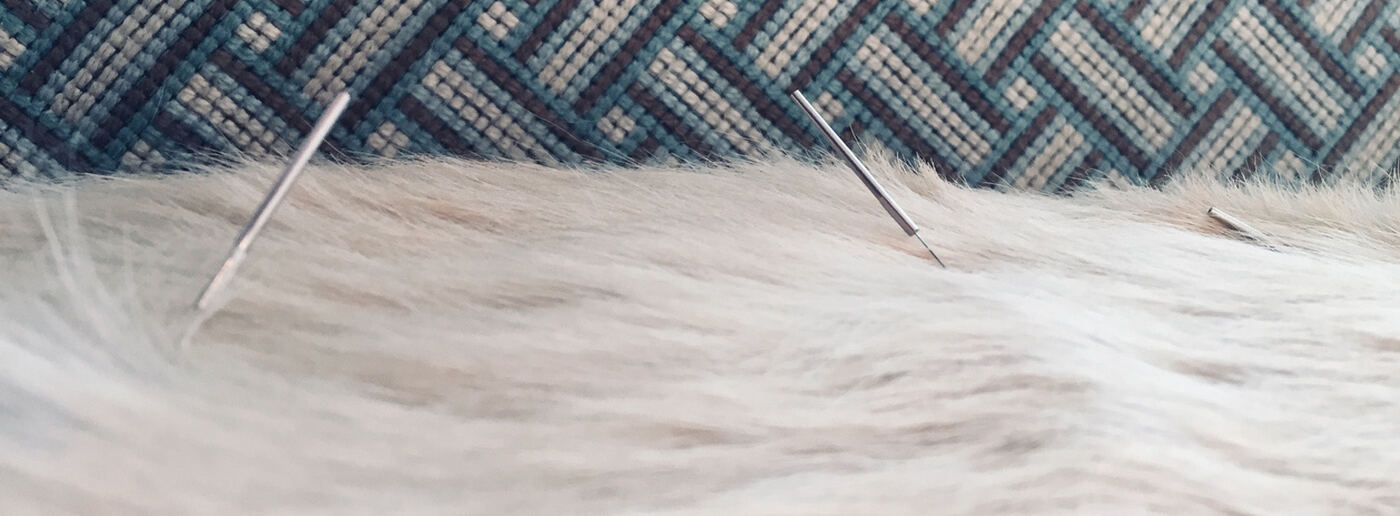
Veterinary acupuncture has been part of clinical practice in the UK and internationally for decades, but pet owners new to it understandably want to know one thing first: does the evidence actually support this?
Educational, not a replacement for your primary vet
This article is educational. It does not replace consultation with your primary veterinary surgeon. Acupuncture at Greenway Veterinary Acupuncture is delivered as part of an integrated treatment plan, alongside, never instead of, your primary vet's care.
Our position at Greenway Veterinary Acupuncture is straightforward, and it shapes how we practise: we believe in acupuncture as a complementary therapy, not an alternative to conventional veterinary medicine. The case for acupuncture rests on peer-reviewed clinical research and recognised professional-body guidance, not on testimonial alone.
This article consolidates the evidence we work from, so you can read it as part of an informed decision about your pet's care, together with your primary vet. Where we cite specific findings, the citation appears at the point of claim.
The most extensively studied use of veterinary acupuncture is in pain management for dogs and cats with chronic conditions.
A prospective clinical study published in the Canadian Veterinary Journal in 2017 followed 181 dogs with neurological and musculoskeletal disease over a course of veterinary acupuncture treatment. Three validated outcome measures were tracked, with the following results:
Key findings from the 2017 cohort
- 79% improvement on the Helsinki Chronic Pain Index (an owner-completed, validated pain-assessment scale used in canine osteoarthritis research)
- 84% improvement in owner-assessed quality of life
- 78% improvement on visual analogue scales for pain
These are not curative outcomes (the study did not claim acupuncture cured underlying disease), but they represent meaningful improvements on validated pain and quality-of-life measures, sustained over the treatment period.
Professional-body consensus
The 2015 American Animal Hospital Association (AAHA) and American Association of Feline Practitioners (AAFP) Pain Management Guidelines for Dogs and Cats described acupuncture as a "compelling and safe method for pain management in veterinary patients", language repeated and extended in the 2022 AAHA Pain Management Guidelines update.
For chronic-pain conditions in our regular practice (arthritis, post-operative recovery, chronic musculoskeletal complaints), this is the evidence base we work from.
Within the pain-management evidence, osteoarthritis and mobility decline are the most studied and most frequently treated conditions.
The 2017 cohort described above included substantial numbers of arthritic dogs, and the Helsinki Chronic Pain Index improvement (79%) is particularly relevant here: the index is a validated tool specifically designed to detect change in arthritic-dog pain over time. Owner-assessed quality-of-life improvement (84%) tracks the same population.
Acupuncture's role for arthritic patients is supportive, not curative. It does not reverse joint degeneration. It does not regenerate cartilage. What the evidence supports is that, for many dogs, regular acupuncture sessions can contribute to:
- Reduced subjective pain scores
- Improved mobility and willingness to move
- Improved owner-perceived quality of life
This is why we frame it as part of an integrated approach. For arthritic dogs, acupuncture sits alongside, not instead of, medication management with the primary vet, weight management, lifestyle adjustment, and where appropriate, hydrotherapy or veterinary physiotherapy. Co-ordination with your vet matters here precisely because the modalities reinforce each other.
Veterinary acupuncture is also used in neurological cases, including some intervertebral-disc-disease (IVDD) patients, post-operative neurological recovery, and certain chronic neurological complaints.
The evidence base here is narrower than for pain management, but the neurophysiological case is well-described in the literature. A comprehensive 2021 review by Dewey and Xie published in the Open Veterinary Journal covered the mechanisms by which acupuncture appears to influence the nervous system, including endogenous opioid release, descending pain inhibition, and anti-inflammatory effects.
We approach neurological cases with appropriate caution. Acupuncture is not a substitute for a full neurological work-up by a specialist, nor for surgery where surgery is indicated. Where it has a role in neurological care, that role is typically as part of a wider plan agreed with the primary vet and, where applicable, with the referring neurologist.
A common (and reasonable) owner question is: why does this work?
The Dewey and Xie 2021 review summarises the current understanding well. Acupuncture appears to work through a combination of:
- Endogenous opioid release. Needling stimulates the body's own pain-relief mechanisms.
- Descending pain inhibition. Acupuncture appears to engage central nervous system pathways that modulate pain signalling.
- Anti-inflammatory effects. Local and possibly systemic.
- Influence on the autonomic nervous system. Affecting muscle tone, circulation, and recovery processes.
This is not a complete mechanistic picture: gaps remain in the research, particularly around longer-term effects and individual variation in response. But it is enough to explain why acupuncture is recognised in mainstream veterinary pain-management guidelines, and why it sits credibly alongside conventional veterinary medicine rather than in tension with it.
The safety record of veterinary acupuncture is a substantial part of why it features in mainstream pain-management guidelines. The 2015 AAHA / AAFP guidelines (and the 2022 update) describe acupuncture as a "safe method for pain management", a description rooted in low rates of adverse events when delivered by qualified practitioners.
In our practice, we work within the standards set by the Association of British Veterinary Acupuncturists (ABVA) and our RCVS-registered veterinary credentials. Sessions are delivered in deliberately low-stress environments: we use non-surgery spaces specifically to minimise the stress most pets associate with clinical settings.
Most pets relax during treatment
Most animals tolerate acupuncture well. Some find treatment so relaxing that they fall asleep partway through. This is consistent with the broader veterinary-acupuncture experience reported by ABVA-credentialed practitioners, and is consistent with the endogenous opioid release that the research describes.
We think it is important to be clear about scope. Acupuncture is not:
- A cure for arthritis. It does not regenerate cartilage or reverse joint disease.
- A replacement for surgery when surgery is indicated.
- A diagnostic tool. Diagnosis remains with your primary vet, who is best placed to investigate underlying causes.
- A guarantee. Individual responses vary; not every patient responds equally.
These boundaries are not weaknesses of the evidence; they are simply the honest scope. Where acupuncture helps, it helps as a complement to broader veterinary care, contributing to reducing pain, enhancing mobility, and promoting healing in ways that the evidence supports. Where it does not fit, we are equally clear with owners about that.
Veterinary acupuncture is supported by peer-reviewed clinical evidence (most strongly in chronic pain management and mobility-related conditions) and is recognised by major veterinary professional bodies as a credible component of integrated pain care. The mechanism by which it appears to work is increasingly well-described in the literature.
We practise it because we believe (and the research supports) that, delivered by RCVS-registered ABVA-credentialed veterinary surgeons as part of an integrated approach with your primary vet, it can meaningfully contribute to happy pet-families, living long and well together.
Reviewed by Dr Claire Greenway BVM&S MRCVS ABVA.
Dr Alastair Greenway
BVM&S MRCVS ABVA
If you think acupuncture could help your pet, get in touch.